
By Matilda Underwood, SEN Advocate, ADHD Embrace
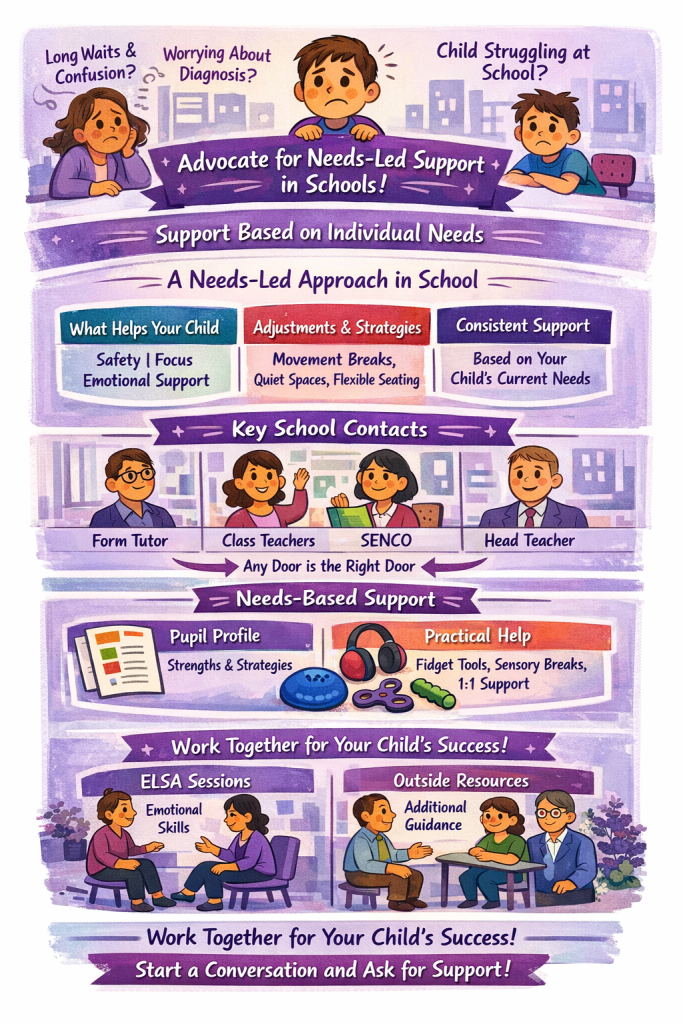
Many ADHD parents carry a quiet worry that without a formal diagnosis, their child will not be seen, believed, or supported at school. Long waiting lists, confusing pathways, and mixed messages can leave families feeling exhausted and stuck, while their child continues to struggle. It’s important to hear this clearly: your child does not need a diagnosis to deserve understanding, support, and care at school — and help should never be delayed while you are waiting for one.
Schools are expected to support children based on their individual needs, not on labels or paperwork. If your child finds attention, emotional regulation, sensory processing, transitions, or organisation challenging, the school can — and should — respond to what they observe in the classroom. Your child’s needs are valid exactly as they are right now.
A needs-led approach focuses on how your child experiences school day to day and what helps them feel safe, regulated, and able to learn. This approach allows support to be put in place early, without waiting months or years for assessments. As a parent, you are absolutely entitled to ask for adjustments and support based on your child’s needs alone. You are not asking for “special treatment” — you are advocating for equity.
There are several key people in school who can support this process. Your child’s form tutor is often a helpful starting point, as they see your child regularly and can notice patterns in learning, behaviour, or wellbeing. Class and subject teachers play an important role in adapting lessons and classroom environments. The SENCO (Special Educational Needs Coordinator) oversees additional support and reasonable adjustments, while the Head of Year can help coordinate support across subjects. The Head Teacher holds overall responsibility for inclusion and wellbeing. You can approach any of these staff members to begin the conversation — there is no “wrong” door.
Support in school can take many practical and meaningful forms. A needs-based passport (sometimes called a pupil profile or one-page profile) can be particularly powerful. This document highlights your child’s strengths, interests, challenges, sensory needs, and the strategies that help them succeed. It promotes consistency across staff and gives your child a voice in shaping their own support.
Classroom strategies may include thoughtful seating arrangements, access to 1:1 support when needed, or being positioned near a trusted adult. Sensory support is just as important and might include movement breaks, opportunities to stand or stretch, fidget tools, wobble cushions, or access to quiet, calming spaces. These are not rewards or “extras” — they are essential tools that help ADHD children regulate, focus, and feel safe.
Many schools also offer ELSA (Emotional Literacy Support Assistant) sessions, which provide gentle, structured emotional support. These sessions can help children build emotional regulation skills, confidence, resilience, and coping strategies, particularly if they experience anxiety or emotional overwhelm.
Schools may also work alongside or signpost families to neurodiversity-affirming or mental health charities and services. These organisations can offer mentoring, group work, family support, and guidance that complements school-based strategies.
As an ADHD parent, you know your child in a way no report ever could. Trust your instincts, ask questions, and keep advocating — even when it feels tiring. Support should always be based on needs, not labels. You have every right to work in partnership with the school to ensure your child is supported, understood, and able to thrive as the unique person they are.